I came across an interesting report on people who are "face blind" (Prosopagnosia) on CBS 60 minutes show today and thought to share it.
Face Blindness: When everyone is a stranger - CBS News
http://www.cbsnews.com/8301-18560_162-57399118/face-blindness-when-everyone-is-a-stranger/
Do you have trouble recognizing faces? Take a test - 60 Minutes Overtime - CBS News http://www.cbsnews.com/8301-504803_162-57399227-10391709/do-you-have-trouble-recognizing-faces-take-a-test/
The researchers at Harvard University has two tests to check face recognition ability . Here are the online tests to access how good you are in recognizing faces. Have a look at them and take it if you have 20-30 minutes to spare.
http://www.faceblind.org/facetests/index.php
Some other brain tests:
BBC - Science & Nature - Human Body and Mind - Face Memory Test http://www.bbc.co.uk/science/humanbody/sleep/tmt/
It's amazing to think about the intricacies and mysteries of brain function. I'm looking forward to the science advancements in this field.
Sunday, August 05, 2012

Saturday, July 23, 2011
Spicy hot long pepper could kill cancer cells
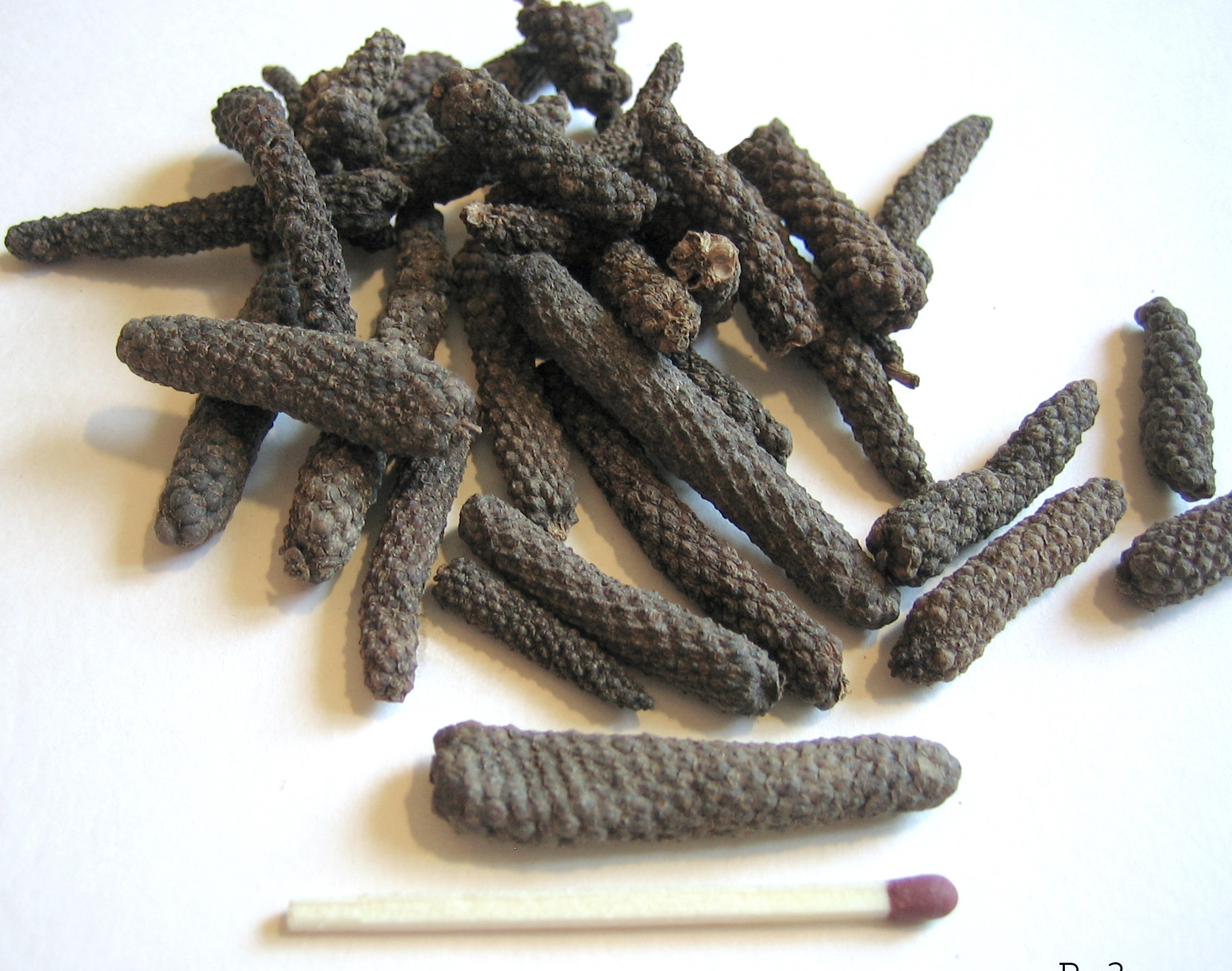
Natural products have played a significant role in fighting cancer. Taxol and Vinca alkaloids are examples of currently approved natural product drug for the treatment of cancer. Many more natural products like curcumine, the active ingredient of South Asian spice turmeric, have been shown to possess anticancer properties. The latest addition to the list is a constituent of long pepper. Piperlongumine (PL), a constituent of the fruit of a pepper plant found in southern India and southeast Asia (Piper longum; തിപ്പലി, പിപ്പലി (tippali, pippali) in Malayalam) has been shown to possess anti-cancer properties. It selectively targets and kills cancer cells but leaving normal cells unharmed.
As a computational medicinal chemist, I was curious about the potential molecular targets of Piperlongumine. From the first look at the chemical structure, it appeared to have some similarity (trimethoxyphenyl group) to Colchicine, a tubuline targeting small molecule.


However the authors found that Piperlongumine acts differently in inducing ROS than the tubuline binding agent Taxol. The compound is reported to target the ROS stress-response pathway. A search to the PubChem chemical biology repository identified shows 22 positive assays results for the Piperlongumine (CID: 637858), mostly from the authors of this publication.
Out of curiosity, I performed an in silico analysis to list potential target using chemoinformatics and chemical biology tools. First I went to the PubChem and searched for chemically similar compounds (95% or more), then listed the positive bioassay results for all of the compounds. From there proceeded to the protein targets of the assays. That listed 14 potential targets.
1. TPA: Tim23p [Saccharomyces cerevisiae S288c] 222 aa protein DAA10558.1 GI:285814664
2. TPA: Tim10p [Saccharomyces cerevisiae S288c] 93 aa protein DAA06693.1 GI:285809906
3. nuclear receptor ROR-gamma [Mus musculus] 516 aa protein NP_035411.2 GI:188536040
4. LANA [Human herpesvirus 8] 1129 aa protein YP_001129431.1 GI:139472804
5. cellular tumor antigen p53 isoform a [Homo sapiens] 393 aa protein NP_000537.3 GI:120407068
6. RecName: Full=BRCA1-associated RING domain protein 1; Short=BARD-1 777 aa protein Q99728.2 GI:116241265
7. Microtubule-associated protein tau [Homo sapiens] 383 aa protein AAI14949.1 GI:92096784
8. E3 ubiquitin-protein ligase Mdm2 isoform MDM2 [Homo sapiens] 497 aa protein NP_002383.2 GI:89993689
9. protein Mdm4 isoform 1 [Homo sapiens] 490 aa protein NP_002384.2 GI:88702791
10. cytochrome P450 1A2 [Homo sapiens] 516 aa protein NP_000752.2 GI:73915100
11. Microphthalmia-associated transcription factor [Homo sapiens] 419 aa protein AAH65243.1 GI:40807040
12. aldehyde dehydrogenase 1 family, member A1 [Homo sapiens] 501 aa protein AAP35567.1 GI:30582681
13. serine/threonine kinase 33 [Homo sapiens] 514 aa protein CAC29064.1 GI:12830367
14. RecName: Full=Breast cancer type 1 susceptibility protein; AltName: Full=RING finger protein 53 1863 aa protein P38398.2 GI:728984
The interesting targets are Microtubule-associated protein tau , E3 ubiquitin-protein ligase Mdm2, Microphthalmia-associated transcription factor, BRCA1-associated RING domain protein 1 and cellular tumor antigen p53. Well, this is just a fun way to use Chemical biology and chemoinformatics for drug design.
Some SAR is listed in the US patent (US20090312373). It would be great to see more SAR of the compound analoges to study the pharmacophores.
It is high time that we carry out a comprehensive systematic scientific research on the properties of traditional medicines and their chemical components. The knowledge of our forefathers should be capaitalized by us to fight the deadly diseases like cancer.
_______________________________________
Selective killing of cancer cells by a small molecule targeting the stress response to ROS
Nature Volume: 475, Pages: 231–234 (14 July 2011) DOI:doi:10.1038/nature10167
http://www.nature.com/nature/journal/v475/n7355/full/nature10167.htmlUS Patent
http://www.freepatentsonline.com/20090312373.pdf
Piperlongumine
SMILES N1(C(C=CCC1)=O)C(/C=C/C2=CC(=C(OC)C(=C2)OC)OC)=O
http://pubchem.ncbi.nlm.nih.gov/summary/summary.cgi?cid=637858
http://www.indofinechemical.com/gnicart/details.aspx?catid=P-004&pid=13253
http://www.rdchemicals.com/chemicals.php?mode=details&mol_id=8163
Structural bioinformatics study: trimethoxyphenyl part in PDB
http://www.pdb.org/pdb/ligand/ligandsummary.do?hetId=SNY&sid=3P9I
Tuesday, July 19, 2011
Life science animations and videos
The Inner Life of a cell: Musical
MITOCHONDRIA
BIOVISIONS AT HARVARD UNIVERSITY
Wednesday, October 07, 2009
Nobel prize commitee recognize significance of Structure-based drug design
Structural biology has evolved considerably after the first breakthrough in understanding the molecular structure of DNA in 1950's. Nobel prize was awarded to them (Physiology/Medicine, 1962) for such an incredible discovery. This year's (2009) Nobel prize for chemistry goes to for their work on structural understanding of ribosomal machinery using X-ray crystallography. Nobel committee believe that this discovery is significant for the structure-based drug design of new antibiotics, especially since the emergence of bacterial resistance.
My thought here is "Will structure-based computational drug design methods bring some breakthrough discoveries in the next 20 years?"
Wednesday, September 23, 2009
Scientific investigation of Indian ancestry: South Indians and North Indians?
Indian ancestry revealed : Nature News
Apparently, Indian population is an excellent study medium for genetic analysis considering the huge endogamous subdivisions of population.
Apparently, Indian population is an excellent study medium for genetic analysis considering the huge endogamous subdivisions of population.
"The researchers showed that most Indian populations are genetic admixtures of two ancient, genetically divergent groups, which each contributed around 40-60% of the DNA to most present-day populations"
"...whereas European ancestry is mostly carved up by geography, Indian segregation was driven largely by caste. "There are populations that have lived in the same town and same village for thousands of years without exchanging genes," says Reich..."
More studies like this might reveal interesting and useful patterns of genetic diseases/resistances, helping us to understand the human genome from clinical perspective.
Thursday, August 20, 2009
Influence of protein shape and conformation on Drug Binding; Lock and key, Induced fit and beyond?
Intrinsic Changes In Protein Shape Influence Drug Binding
"According to the classical view, known as "induced fit," drug binding causes a change in the target protein structure......But it now appears that a protein has many different conformations that are already available even without the presence of a binding molecule, which is called the ligand. The ligand attaches to the protein shape that allows it to fit well, and that close interaction can lead to effective inhibition of protein function...."
Well, the thought process was on the horizon for sometime...
PNAS Article
Thursday, January 15, 2009
Why the Pfizer layoff? narrowing its research focus? Cardiovascular research abandoned.
Drugmaker Pfizer cutting up to 800 scientist jobs - washingtonpost.com
"The move comes after the company announced in September it was narrowing its research focus to six disease areas Alzheimer's, cancer, schizophrenia, pain, inflammation and diabetes"...
"Surprisingly, one of the areas abandoned was cardiovascular disease, where Pfizer had been a dominant player with its $13 billion-a-year cholesterol fighter Lipitor, the world's top-selling drug..."
Wednesday, January 14, 2009
More drug approvals from FDA is a welcome sign
More approvals are welcome. Industry accuses FDA for not being efficient. At the same time, one should not forget about incidents like Vioxx tragedy
FDA Approves More Drugs, Still Misses Deadlines
FDA Approves More Drugs, Still Misses Deadlines
Tuesday, December 23, 2008
FDA Warns Consumers About Tainted Weight Loss Pills
Health hazard from online pharmacies? See the FDA report published yesterday.
FDA Warns Consumers About Tainted Weight Loss Pills
FDA Warns Consumers About Tainted Weight Loss Pills
Blogged with the Flock Browser
Sunday, December 21, 2008
News: Computer Aided Drug Design in Cancer drug discovery
Another news of Computer Aided Drug Design in Cancer drug discovery.
http://www.recordnet.com/apps/pbcs.dll/article?AID=/20080405/A_NEWS/804050326/-1/A_LIFE
http://www.recordnet.com/apps/pbcs.dll/article?AID=/20080405/A_NEWS/804050326/-1/A_LIFE
Thursday, December 18, 2008
Best selling drugs - Lists
Two among the top selling 10 drugs are proteins while all others are small molecules. Are we expected to see more protein based drugs in the near future?
Ten Best-Selling Drugs Worldwide 2006
List of bestselling drugs - Wikipedia, the free encyclopedia
Ten Best-Selling Drugs Worldwide 2006
List of bestselling drugs - Wikipedia, the free encyclopedia
Blogged with the Flock Browser
Thursday, July 03, 2008
Open source model in scientific research publising: A revisit to the financial future
Nature has some news to tell the world about their rival PLoS (Public Library of Science). Open source publishing by PLoS thrives on charity funding. Does the business model needs a redesign of it's aims, goals and strategies? Or is it a cheap trick from scared Nature publishing? Judge yourself....
PLoS stays afloat with bulk publishing : Nature News
PLoS stays afloat with bulk publishing : Nature News
Wednesday, June 18, 2008
The corrupted use of Photoshop in biomedical research
Photoshop might be a "useful" program for many unscrupulous manipulation of research data if it doesn't make sense. Check this out
Researcher suspended for falsifying data : Nature News: "Researcher suspended for falsifying data"
Hopefully no one fell into pit following up with her research finding.
Yet nother disappointing story. Blame it on the tenure track reviews and peer-pressure!
Researcher suspended for falsifying data : Nature News: "Researcher suspended for falsifying data"
Hopefully no one fell into pit following up with her research finding.
Yet nother disappointing story. Blame it on the tenure track reviews and peer-pressure!
Wednesday, January 23, 2008
"QSAR: dead or alive?": Journal of Computer-Aided Molecular Design
SpringerLink - Journal Article: "QSAR: dead or alive?"
Another article analysing decline of use of QSAR in drug design. It happens that the previous similar article* also came from Bristol-Myers Squibb.
*http://pubs.acs.org/cgi-bin/abstract.cgi/jcisd8/asap/abs/ci700332k.html
Another article analysing decline of use of QSAR in drug design. It happens that the previous similar article* also came from Bristol-Myers Squibb.
*http://pubs.acs.org/cgi-bin/abstract.cgi/jcisd8/asap/abs/ci700332k.html
Friday, January 18, 2008
Growth of the Asian health-care market: global implications for the pharmaceutical industry : Nature Reviews Drug Discovery
Growth of the Asian health-care market: global implications for the pharmaceutical industry : Nature Reviews Drug Discovery
The stats says that India is one of the worse in Asia in health care.
Check the graphs at nature drug discovery reviews..
The stats says that India is one of the worse in Asia in health care.
Check the graphs at nature drug discovery reviews..
Re-engineered Gleevec reduces heart risks
Re-engineered Gleevec reduces heart risks
Scientist at Rice-M. D. Anderson came up with a successful example of rational computer based drug design; yet another one in recent CADD approaches.
Scientist at Rice-M. D. Anderson came up with a successful example of rational computer based drug design; yet another one in recent CADD approaches.
Thursday, January 17, 2008
List of World’s Fastest Supercomputers
30th Edition of TOP500 List of World’s Fastest Supercomputers Released, Big Turnover Among the Top 10 Systems | TOP500 Supercomputing Sites:
Finally India into the top 10 of supercomputing!!
Check the news...
"For the first time ever, India placed a system in the Top 10. The Computational Research Laboratories, a wholly owned subsidiary of Tata Sons Ltd. in Pune, India, installed a Hewlett-Packard Cluster Platform 3000 BL460c system. They integrated this system with their own innovative routing technology and achieved 117.9 TFlop/s performance."
Trends in the globalization of clinical trials : Article : Nature Reviews Drug Discovery
Trends in the globalization of clinical trials : Article : Nature Reviews Drug Discovery
It's evident that clinical trials are among the top latest happening things in Indian pharmaceutical industry. In this nature article, India with 20% growth in clinical trials is ranked (16th) ahead of China (25th). But wait, China shows an amazing growth of 47%, the most by any countries. Keep watching, something is really happening around....
It's evident that clinical trials are among the top latest happening things in Indian pharmaceutical industry. In this nature article, India with 20% growth in clinical trials is ranked (16th) ahead of China (25th). But wait, China shows an amazing growth of 47%, the most by any countries. Keep watching, something is really happening around....
Wednesday, January 16, 2008
Patenting the drug targets: New horizon and new social/monetary impacts
Reach-through claims for drug target patents: Rx for pharmaceutical policy :
When a major chunk of scientific community debate for a free world (GNU), here comes a new development; patent the targets and earn money through the drugs acting on it.. Who'll finally pay for it? The unfortunate patients..
However this will be a motivating news to the biologist/pharmacologist who work hard to find novel targets but who are usually least benefited in monetary terms. It is crucial to make a fool-proof patent law in this regard. Otherwise, it'll hinder not only the scientific freedom but also treatment availability to the poor suffering patients.
Monday, January 14, 2008
The Trouble with QSAR (or How I Learned To Stop Worrying and Embrace Fallacy)
The Trouble with QSAR (or How I Learned To Stop Worrying and Embrace Fallacy)
Interesting article!

The picture provided is hilarious :)
(*Image from ACS J. Chem. Inf. Model.)
Interesting article!

The picture provided is hilarious :)
(*Image from ACS J. Chem. Inf. Model.)
Subscribe to:
Posts (Atom)